Why Does My Grease Trap Smell, Even After It’s Pumped?
Why does my grease trap smell? The grease and food waste held in the trap break down and give off gas, and something is letting that gas reach your kitchen or dining room. The possible reasons: the trap is due or overdue for its pump-out, the last pump-out left waste behind, the lid no longer seals, a nearby floor drain has dried out, or the trap itself is damaged. Each has a different fix, and a different person to call.
We do grease trap repair in Dallas, TX. We don’t pump traps or haul waste; your City-permitted pumping company does that. This guide sorts the smells so your first call goes to the right people.
Before anything else: keep people back
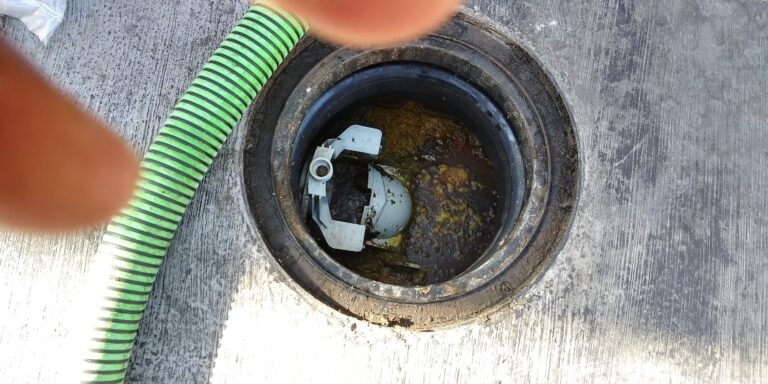
A trap lid opens onto the same kind of access point as a sewer manhole. EPA’s inspector training treats manholes as confined spaces that can hold dangerous gases, hydrogen sulfide and methane among them. If the smell is strong, move staff and customers away from it. Don’t lift the lid yourself, and never put your head, hands or fingers into the opening or under a lid that is partly open.
Why does my grease trap smell?
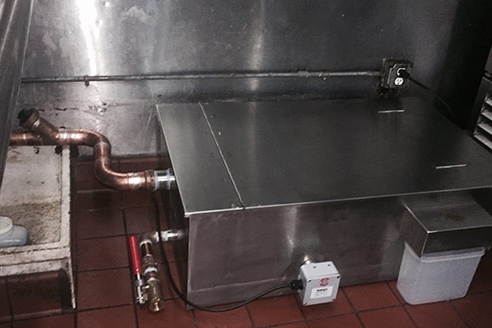
Inside the trap, grease floats to the top and food solids sink to the floor, while the separated water leaves through the outlet pipe. That waste sits in the trap between pump-outs and decays. EPA describes how, in wastewater, sulfide combines with hydrogen to form hydrogen sulfide gas, which escapes into the air space above the water, and more of it escapes as the water gets warmer. EPA also names the conditions that produce more of it: water held for a long time, little oxygen, and a heavy load of organic waste.
Whether you smell it depends on whether the gas has a way out. These are the possible causes, and more than one can be true at once:
- The trap is due. In Dallas, the City’s notice requires a 100% pump-out at the earlier of ninety days, or the point where floating grease, oils and settled solids reach 25% of the trap’s wetted height. Wetted height is measured from the trap’s floor to the bottom of the outlet pipe.
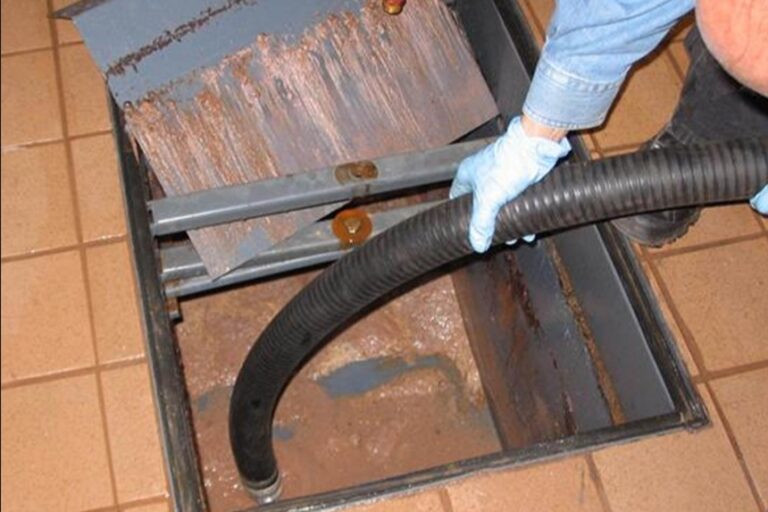
- The last pump-out was incomplete. Solids that settle on the floor have to come out on the same visit. A trap that was only skimmed can look clear on top and still hold decaying waste underneath.
- The lid or access cover doesn’t seal. Trade sources read a lid that no longer sits tight, or a leaking gasket, as damage rather than a cleaning problem.
- The smell isn’t coming from the trap. Pages on trap odors also point to a dried-out water seal letting sewer gas through. A water seal is the small amount of water that sits in a drain’s bend and blocks gas from the pipe below.
- The trap is too large for the kitchen it now serves. EPA warns that an oversized grease interceptor “can allow hydrogen sulfide generation, corrosion, and odors.”
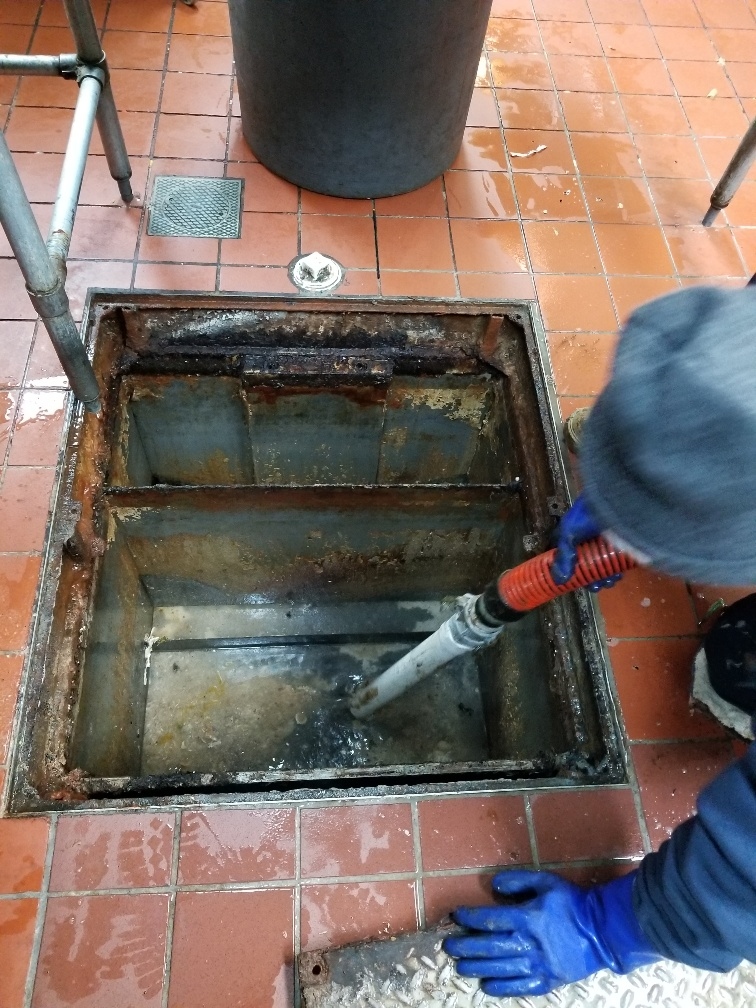
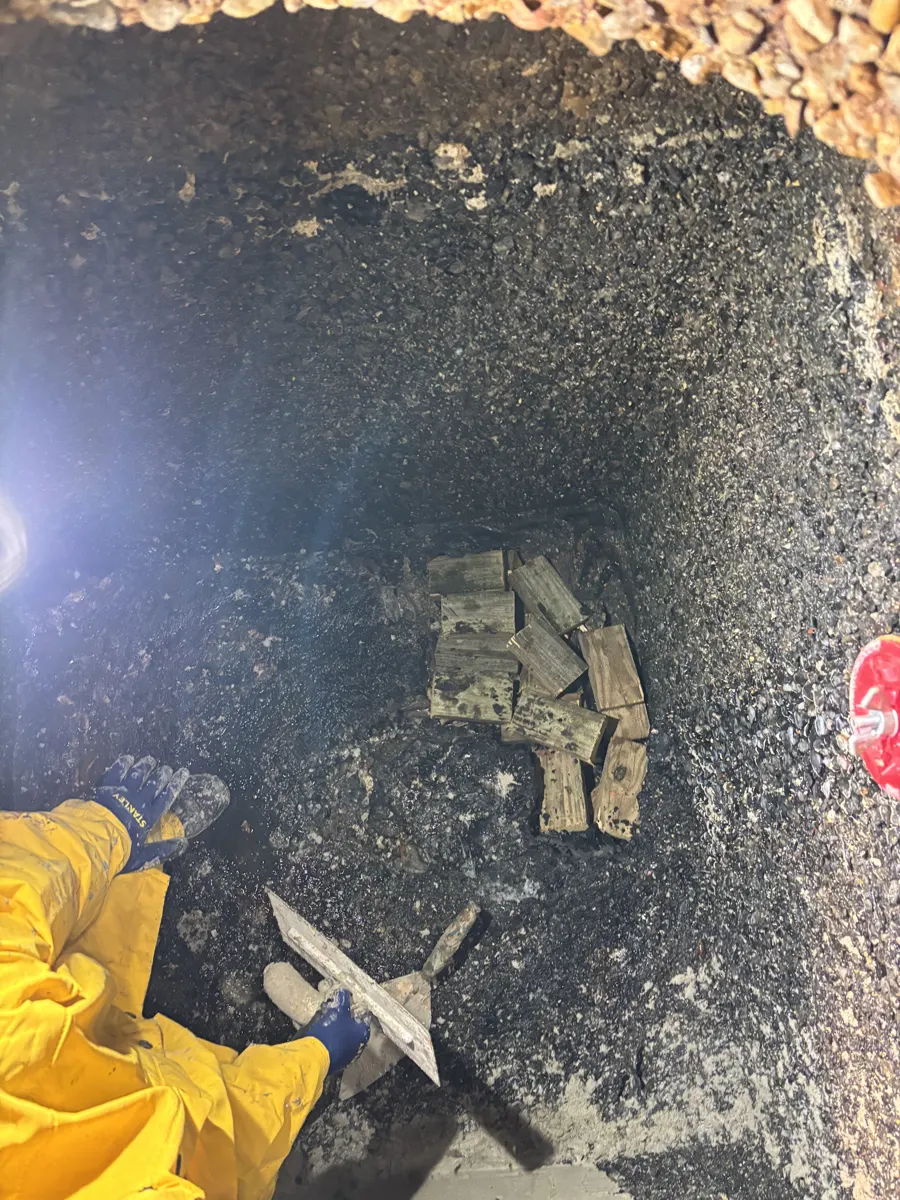
- The trap is damaged. Walls eaten into holes, a crumbling baffle or a rusted-through steel body are physical faults, and no pump-out closes them.
Why does my grease trap smell like rotten eggs?
Trade sources describe a rotten-egg smell near the drains or the trap as a sign that the waste inside is decomposing and overdue for removal. Pages on trap odors name the gases from that breakdown, hydrogen sulfide among them.
Start with the calendar. Find the trip ticket from your last pump-out: Dallas requires those manifests to be kept on site, so the date is in your office. If the ninety days are nearly up, or your pumping company has told you the grease and solids build up fast, book the pump-out now. That is a job for your pumping company, and the City says it must be a liquid waste transporter permitted by the City of Dallas.
Applying EPA’s general findings to a single trap is our reading, not an EPA statement about traps. Even so, waste held longer, in warm water, with little oxygen, is the combination EPA ties to more hydrogen sulfide. Pumping on time shortens how long that waste sits.
The same gas matters for the trap itself. EPA traces concrete corrosion in wastewater systems to hydrogen sulfide: bacteria on the damp surfaces above the waterline turn it into sulfuric acid, and that acid attacks the cement. On steel, EPA describes the gas attacking the metal directly. So a trap that has smelled of rotten eggs for years may also have lost wall thickness above the water.
Why does my grease trap smell like sewage?
A grease trap isn’t meant to hold toilet waste. The trade standard for these units says no fixture that carries sanitary waste, meaning waste from toilets and urinals, should drain into a grease interceptor. So when the smell is like an open sewer, our reading is that the gas may be coming from the sewer side of your plumbing rather than from the grease itself.
Two places to check:
- Drains that rarely run. A floor drain or a sink that nobody uses can lose the water in its bend. Without that water seal, gas from the line below can come straight up into the room.
- The vent. A grease trap has an air intake on its outlet side; the diagram in the City’s brochure shows one. It lets air into the space above the water so the trap doesn’t siphon or build up back-pressure. If it is blocked or broken, the water seals in the drains connected to it can be pulled out.
Dried-out drains and vents are a plumber’s work, not a pumping or a repair job.
There is a third possibility that is the trap’s own fault. A trap whose walls have opened into holes can let wastewater out into the ground around it, and trade sources read a water level that drops between uses as a sign of a leaking tank rather than a full one. If your pumping crew reports holes, or a level that keeps falling, that is damage. If water is also rising out of the drains, our guide to a grease trap overflowing covers that.
Why does my grease trap smell after cleaning?
A smell right after a pump-out is a clue, because a fresh pump-out takes the trap’s contents away. These are the questions to work through.
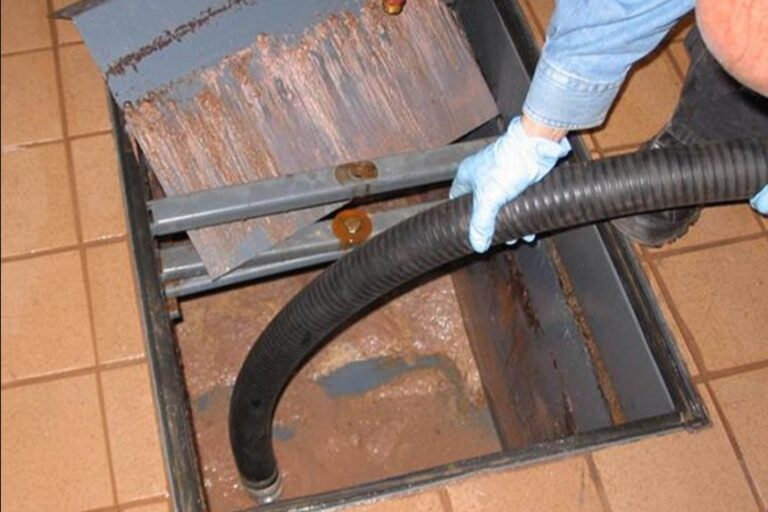
Was all of it taken out? Under the City’s notice, the restaurant “must supervise the cleaning and is to insure that 100% of the traps contents are removed.” That means the floating grease, the water and the solids on the floor. If the crew took only the top layer, the decaying waste is still there. Ask them to finish the job, and have someone watch the next one from start to end.
Was the lid put back properly? Check that the access cover sits flat and tight on its ring. A cover that rocks, has cracked, or has a gasket that no longer seals lets gas out between pump-outs.
Were the ports left clear? The trade standard for these units says that after each cleaning, the inlet, the outlet and the air relief ports should be checked for anything blocking them. Ask the crew whether they did.
Is the smell really from the trap? If the smell is strongest at a floor drain or a quiet sink, go back to the sewage section above: that points to a dry drain or a vent, and a plumber.
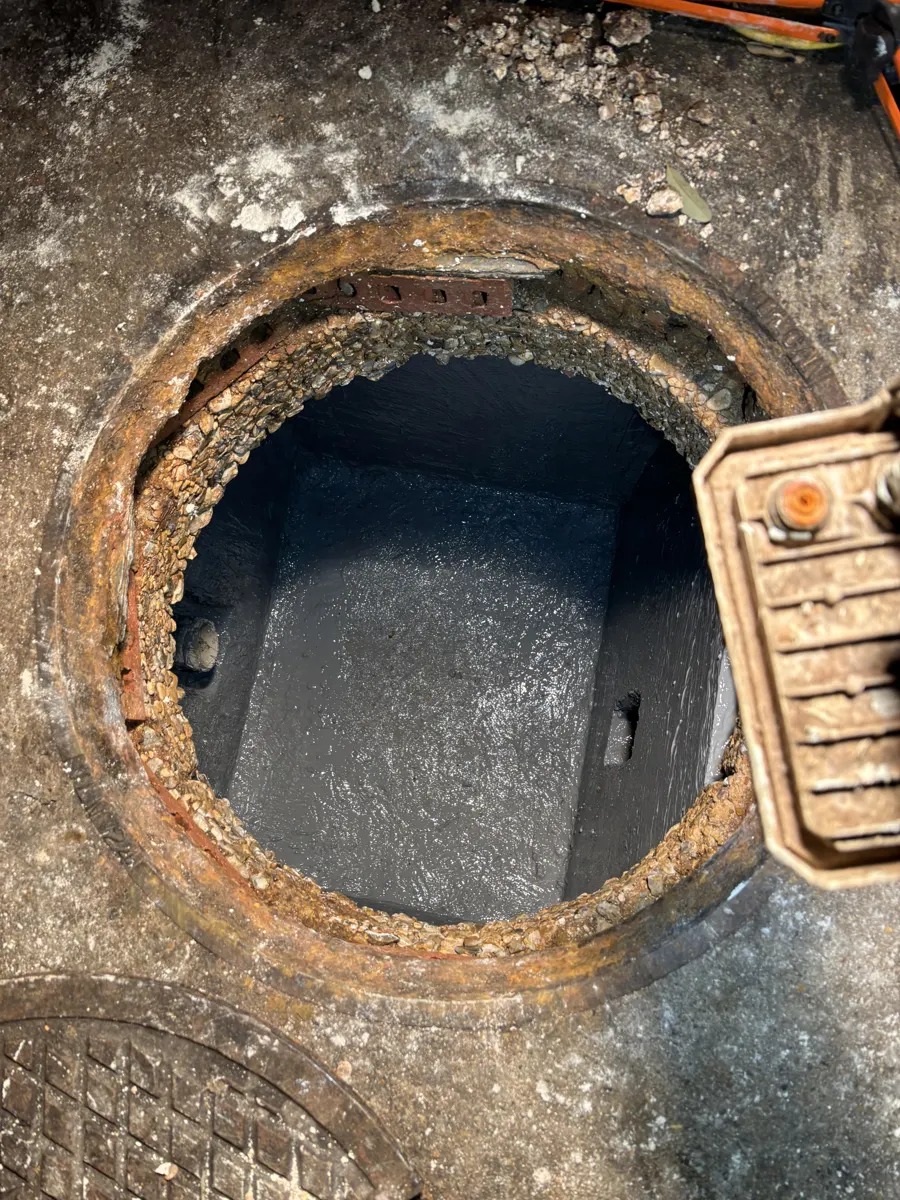
If the trap was emptied completely, the lid seals and the drains are wet, and the smell still comes back within days, we’d read that as a reason to look at the trap itself. Walls with holes, a broken baffle or rusted steel are what we look for at a free on-site inspection. For background on how traps reach that state, read what causes grease trap problems in Dallas kitchens.
How do you get rid of grease trap smell?
Find the cause first, because each cause has its own fix. In order:
- Clear the area. Keep people away from a strong smell and leave the lid closed.
- Check the date. Your latest trip ticket tells you when the trap was last emptied. If it is near the ninety days, or the trap fills fast, call your City-permitted pumping company. If you don’t have one, the City’s notice says “A list of permitted transporters is available upon request.”
- Watch the pump-out. Make sure the whole trap is emptied, the gallons are written on the ticket, and the lid goes back tight.
- Check the drains. If the smell sits at a floor drain or a sink that seldom runs, or near a vent, call a plumber.
- Have the trap looked at. If the smell returns soon after a complete pump-out, or the crew saw holes, crumbling walls or a broken baffle, book a free on-site inspection with us.
What not to pour into the trap
When we checked the pages that rank for this question, they suggested flushes, and weekly enzyme treatments. Dallas sets the limits here. The City’s brochure says “Bacterial and enzyme products will not decrease your pump out frequency”, so the ninety-day and 25% limits stay where they are. And the City’s notice says “Hazardous wastes, such as acids, strong cleaners, pesticides, herbicides, paint, solvents or gasoline, should not be disposed of in the sanitary sewer.” An acid poured into a trap also lands on walls the hydrogen sulfide may already be eating.
Pump-out problem or repair problem?
| What you notice | What it may mean | Who to call |
|---|---|---|
| Rotten-egg smell, the last trip ticket is close to ninety days old, thick grease on top | The trap is due | Your pumping company (a City-permitted transporter) |
| Smell right after a pump-out, and solids or grease were left in the trap | The pump-out was incomplete | Your pumping company, to finish the job |
| Sewage smell at a floor drain, a quiet sink or near a vent | A dry water seal or a vent problem | A plumber |
| The lid rocks, has cracked or no longer seals | A worn or damaged cover | Your pumping company can look at the cover at the next pump-out. If the walls inside are also damaged, us, for a free on-site inspection. |
| The smell returns within days of a complete pump-out, or the crew saw holes, crumbling walls or a broken baffle | Damage to the trap itself | Us, for a free on-site inspection |
Will repairing the grease trap stop the smell?
Only when damage is the cause. Repair fixes the trap’s structure. It won’t empty a full trap or refill a dry drain, so the pump-out schedule and the plumbing still matter after a repair.
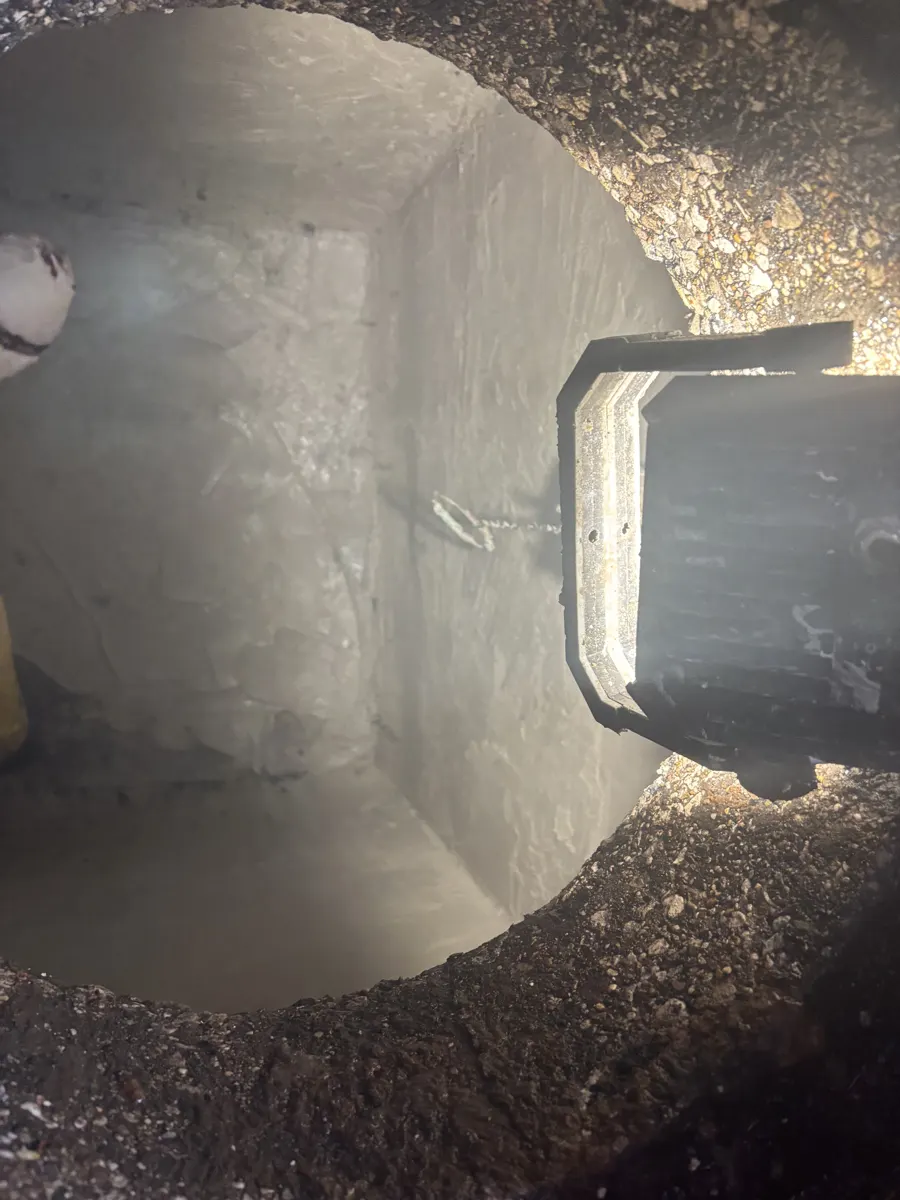
When the trap is damaged, the repair is called coating. Your pumping company empties the trap first. Our crew then cleans and degreases the inside, repairs every hole and crack, rebuilds broken walls such as the baffle, and coats the whole trap. We work on cast concrete, steel and fiberglass traps, underground or above ground. The crew comes overnight after your kitchen closes, and the trap is ready the next morning. A repair typically costs under half of what replacing the trap would, and the price depends on the size of the trap and the amount of damage. For the wider decision, see how Dallas businesses can deal with grease trap damage.
Repaired traps are guaranteed to pass inspection, backed by high industrial-grade materials, a repair to the original specifications and coordination with the city inspectors. Pump-outs on the City’s schedule, signed trip tickets and a City-permitted transporter stay your part.
Every repair carries a 10-year warranty on labor and materials, as long as the trap gets regular pump-outs.
We also offer grease trap deep cleaning and degreasing in Dallas as one of our four services; our post on how deep cleaning keeps Dallas grease traps efficient explains where it fits. Neither takes the place of the pump-outs the City requires from a permitted transporter.
See how our grease trap repair service in Dallas works
What else do Dallas kitchens ask about grease trap smells?
Can a Dallas inspector cite a restaurant because the grease trap smells?
The City’s brochure doesn’t list a smell as a reason. The citations it names are for “not having a grease interceptor, failure to service your grease interceptor at least every 90 days, not having manifests onsite or using a non-permitted transporter.” A smell can still lead to one of those, because an overdue trap is the second item. The inspector also measures the grease and solids in the trap and may increase your pump-out frequency if it needs more maintenance. Our guide on how to pass a grease trap inspection in Dallas covers the rest of that visit.
Can an oversized grease trap smell worse?
It can. EPA lists hydrogen sulfide, corrosion and odors as risks of oversizing, because water stays in a large trap longer than it needs to. In Dallas, the City’s Development Services plumbing inspector sets interceptor sizes, using factors such as hours of operation, seating capacity and dishware use. If your kitchen now serves far fewer meals than when the trap went in, that inspector is the person to ask about size.
Who can answer questions about the Dallas grease trap rules?
The City’s notice names the City of Dallas Pretreatment and Laboratory Services Division as the office to call with questions. The notice itself asks to be posted in a prominent place in your office, so its contact details should already be on your wall.
Who should you call about a grease trap smell in Dallas?
If the trap is due, call your pumping company and watch the pump-out. If the smell is at a drain or a vent, call a plumber. If the smell keeps coming back after complete pump-outs, or your crew has seen holes, crumbling walls, or a broken baffle, call us for a free on-site inspection. We’re open 24/7, and a person answers at night. See the Dallas-area cities we serve, or send us a message.
Sources
- City of Dallas, Grease Interceptors brochure (PDF)
- City of Dallas, Grease Traps/Interceptors notice for food service establishments (PDF)
- U.S. EPA, Hydrogen Sulfide Corrosion on Wastewater Collection and Treatment Systems, Report to Congress
- U.S. EPA, Fats, Oils and Grease, NPDES operator webinar slides
- Plumbing and Drainage Institute, grease interceptor standard
- City of Bellevue, Washington Utilities, Fats, Oils and Grease: How the System Works
- Blog posts written by plumbing and grease trap service companies, on warning signs, leaks and odors
Last updated October 2026. Links last reviewed October 2026.