How to Pass a Grease Trap Inspection in Dallas
How to pass a grease trap inspection in Dallas comes down to three things on the day the inspector from Dallas Water Utilities walks in. The trap was fully pumped out within the last 90 days, and before grease and solids reached 25% of it. The trip tickets from those pump-outs are on site and signed. And the trap itself is in what the City’s notice calls “continuous proper working condition”, which a pump-out alone can’t guarantee.
A calendar and a binder take care of the first two. The third is where grease trap repair in Dallas comes in, so this guide also shows how to tell a trap that is simply full from one that is damaged.
What does a Dallas grease trap inspector check?
Grease trap inspections in Dallas are carried out by a Liquid Waste Inspector from Dallas Water Utilities. You may hear it called a FOG inspection, FOG being short for fats, oils and grease. The City’s brochure says the inspector covers three things on the visit:
- Your paperwork. The inspector asks to see the manifests a permitted transporter gave you at each pump-out. In Dallas these forms are called trip tickets.
- Your kitchen. The visit includes an inspection of the kitchen itself.
- The trap. The inspector measures how much grease and solids have built up inside it.
The brochure says the visit is there to confirm the trap “is serviced at least every 90 days”. What the inspector finds can also change your schedule: if the trap is undersized, or needs more maintenance than it’s getting, the inspector may increase how often you have to pump it out.
How often does a grease trap need to be pumped in Dallas?
At least every 90 days, and sooner if the trap fills faster than that. The City’s posted grease trap notice requires a 100% pump-out at whichever comes first: ninety days, or the point where floating grease, oils and settled solids take up 25% or more of the trap’s wetted height. Wetted height is the depth from the floor of the trap up to the bottom of the outlet pipe.
So 90 days is the longest you can go, not a target. A busy kitchen can pass the 25% mark well before the 90 days are up, and from that point the trap is overdue.
The City’s brochure shows the sum with one example trap. Grease floating on top measures 0.5 ft, and solids on the bottom 1.0 ft, out of 4.0 ft of total contents. Add the two layers together and divide by the depth, and that trap is at 37.5%. The brochure’s verdict is that this kitchen has gone past the 25% rule and has to pump out more often.
To use the rule yourself, ask your pumping company how deep the grease and solids layers were when they opened the trap. If the answer at your current interval is close to a quarter of the depth, shorten the interval before an inspection does it for you.
Additives won’t stretch the schedule. The brochure says it plainly: “Bacterial and enzyme products will not decrease your pump out frequency”.
What records do you need for a grease trap inspection in Dallas?
Trip tickets. A trip ticket is the City of Dallas liquid waste manifest, a five-part form the pumping company brings to every pump-out. The form has fields for the date serviced, the transporter company and the gallons removed.
Under the City’s notice, each trip ticket is handled like this:
- The transporter gives you the ticket to fill in before any waste is removed from your trap.
- You make sure the transporter writes down the number of gallons taken out.
- You and the transporter both sign the trip ticket at the time the waste is removed.
- Your first copy is your receipt. Keep it until the completed record comes back from the disposal company.
- That final record stays at the restaurant where the trap is, for three years, where City staff can examine it.
On a 90-day schedule, that is a ticket for every pump-out across three years. Keep them in one binder in the office of the restaurant the trap serves, in date order. If one is missing, ask your pumping company whether they can supply a copy before the inspector asks you for it.
Do you have to be there when your grease trap is pumped?
Yes. The City’s notice says the Generator, which is the restaurant, “must supervise the cleaning and is to insure that 100% of the traps contents are removed.” The brochure puts the same duty in one line: food service establishments must witness every clean-out.
Supervising doesn’t mean doing the work. It means someone from your team is there and checks three things before signing:
- The whole trap is emptied: the floating grease, the water and the solids on the bottom, not just the top layer.
- The gallons removed are written on the ticket.
- The truck belongs to a transporter permitted by the City of Dallas. The City’s notice says a list of permitted transporters is available upon request.
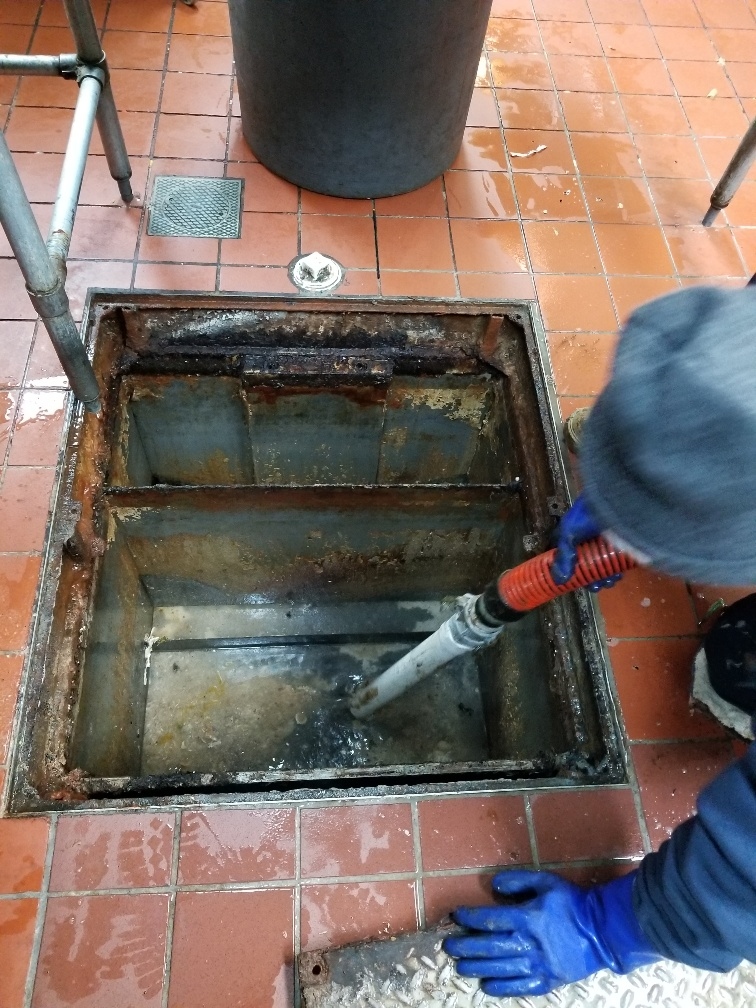
The pump-out is also your clearest view of the trap’s condition. With the trap empty, the walls, the baffle and the pipe fittings can be seen. Ask the crew what they notice. Look from beside the opening and don’t lean or reach in: like a sewer manhole, an open trap can hold dangerous gases such as hydrogen sulfide and methane.
What fails a grease trap inspection in Dallas?
The City’s brochure names four things a citation can be issued for:
- having no grease trap or interceptor at all
- going longer than 90 days without servicing it
- not having your manifests on site
- using a transporter the City hasn’t permitted
The last three come down to a pump-out schedule, a binder of tickets and a City-permitted pumping company. The first is different: a kitchen with no trap needs one installed, and grease trap installation is one of the four services we offer.
The notice adds a duty that sits outside that list. The restaurant is responsible for “maintaining the traps in continuous proper working condition.” The brochure puts it more briefly: “Grease interceptors must be maintained and inspected regularly.” Neither document names damage as a reason for a citation. Our reading, as a repair company, is that a trap with holes in its walls or a broken baffle is not in proper working condition, however often it is emptied.
Damage that a pump-out doesn’t fix
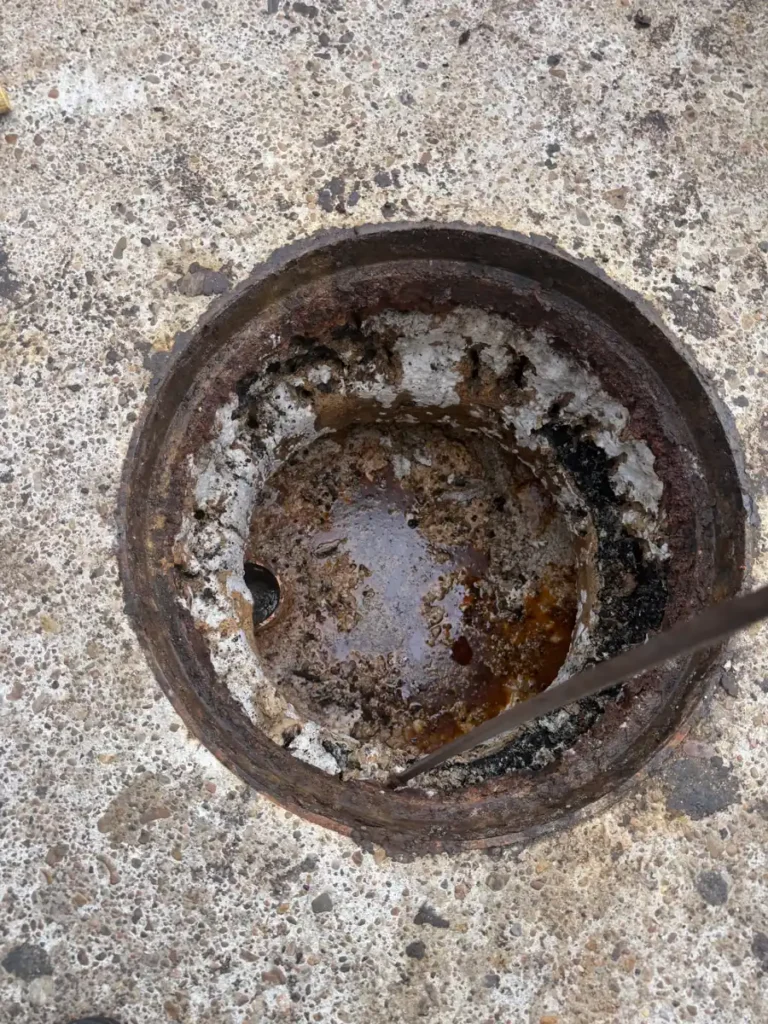
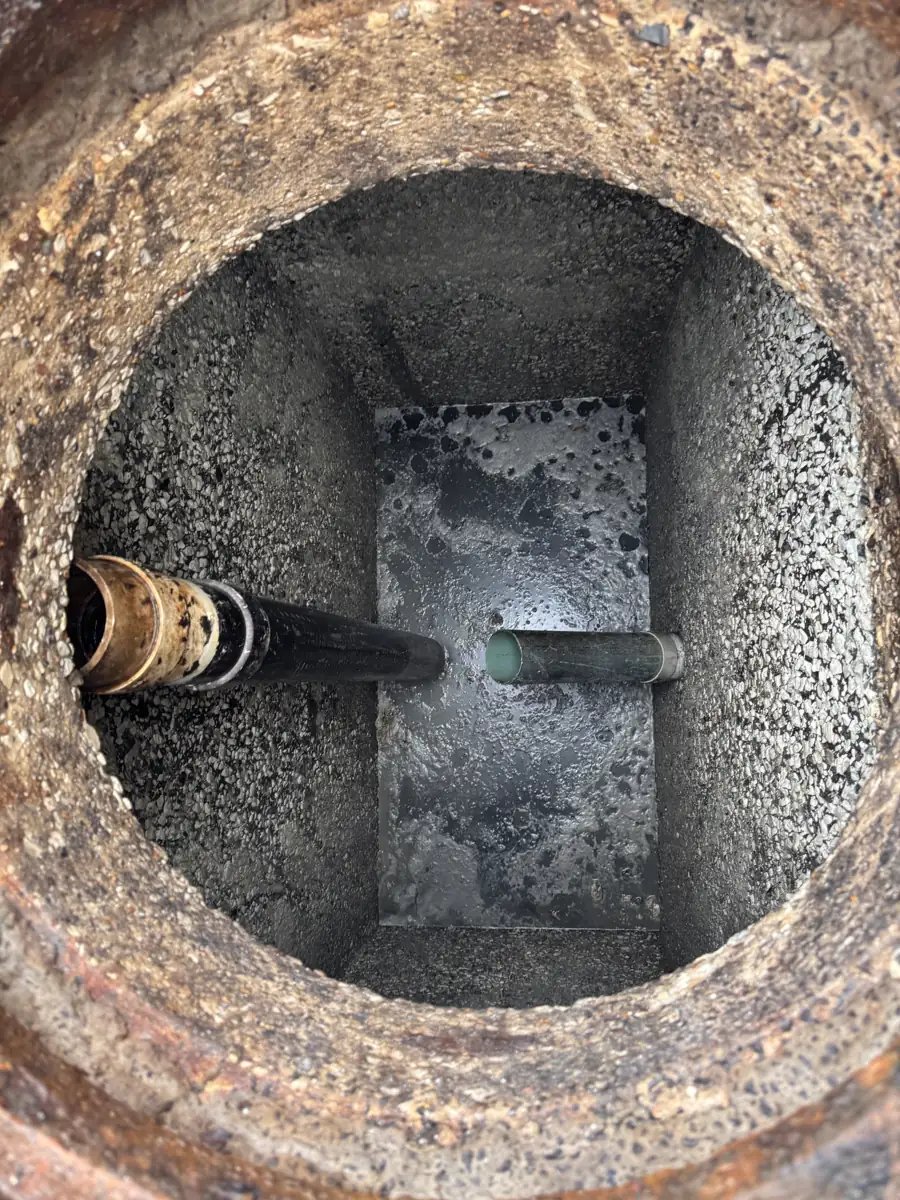
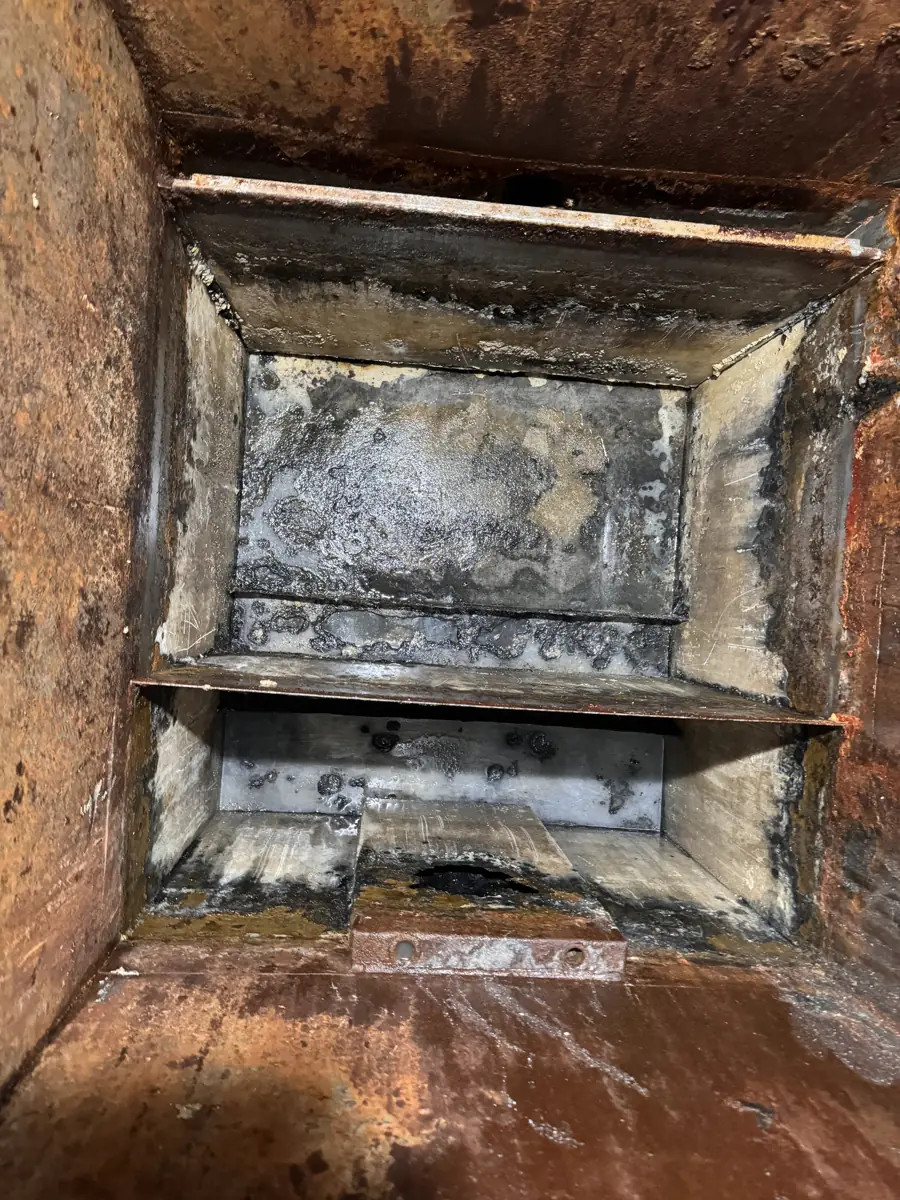
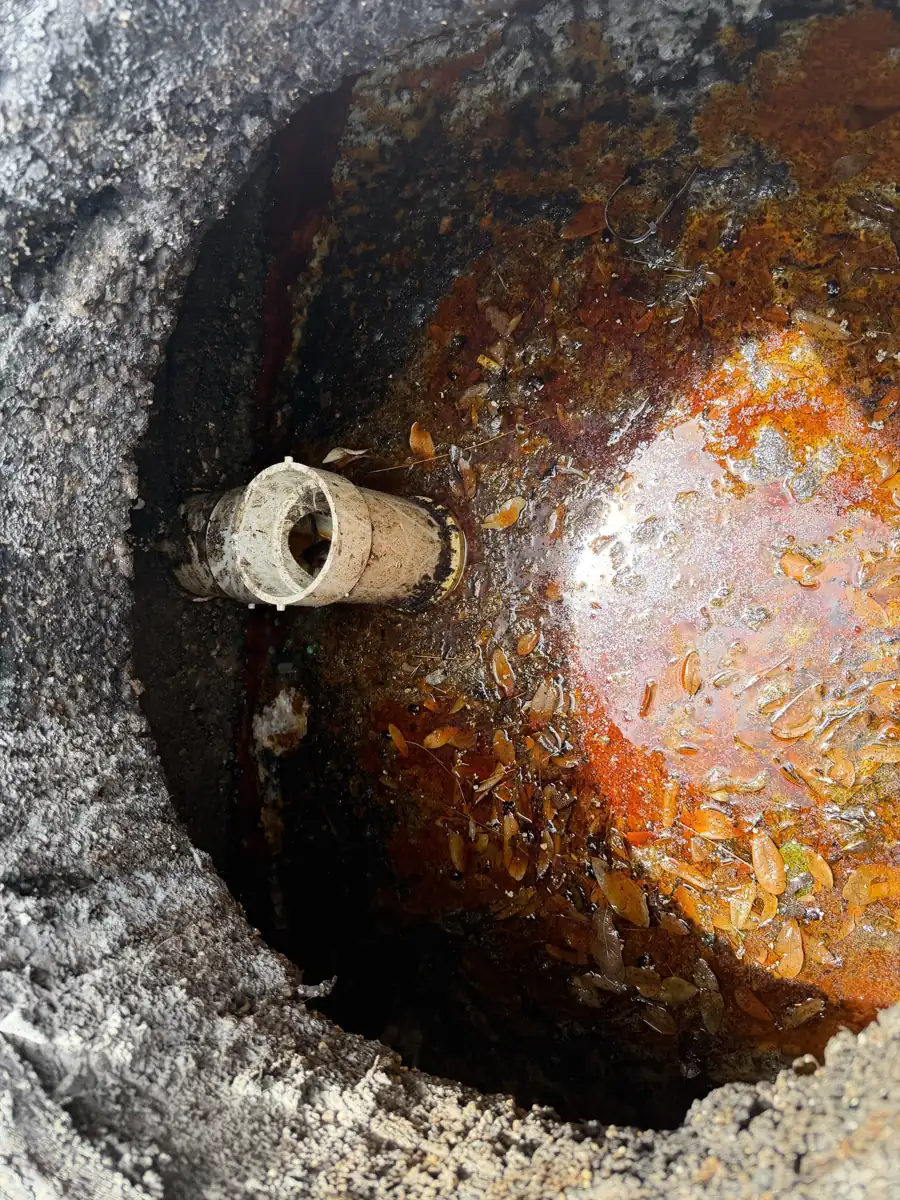
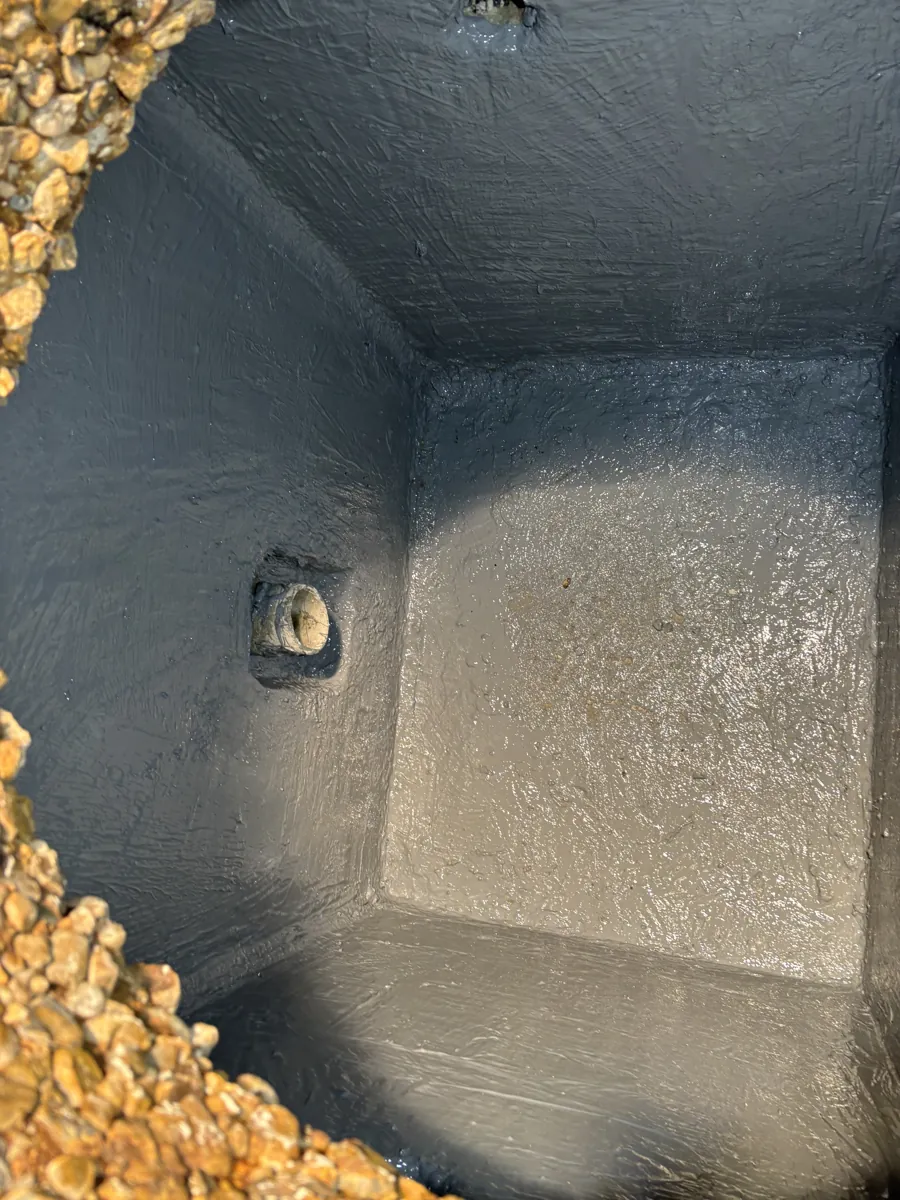
Concrete and steel traps wear from the inside. As grease and food waste break down, they give off hydrogen sulfide gas. On damp surfaces above the water line, bacteria turn that gas into sulfuric acid, the same process that eats concrete sewer pipes, and the gas itself corrodes steel. Over time it leaves damage like this:
- Corroded walls. Concrete that has gone soft, crumbled or opened into holes, or steel that has rusted through. A trap with holes can let wastewater out into the ground around it.
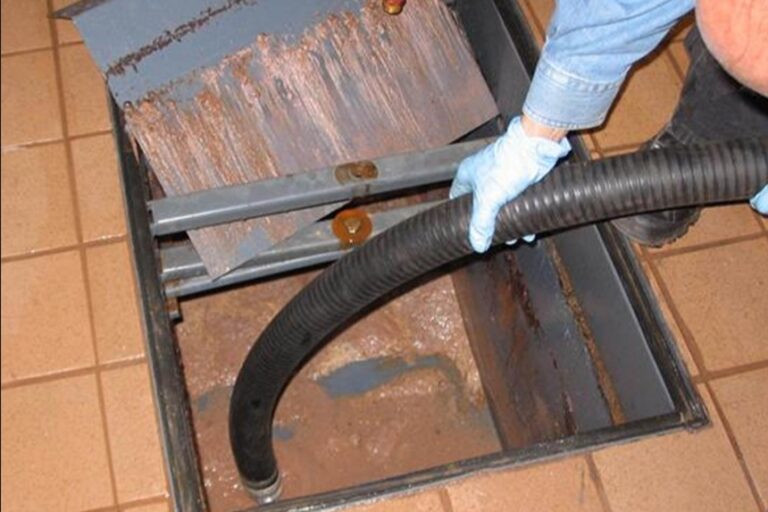
- A corroded, broken or missing baffle. The baffle is the wall inside the trap that holds floating grease back while water passes underneath. Once it breaks, grease travels on toward the outlet instead of staying in the trap.
- Rusted or missing fittings at the pipes. Tees are the T-shaped fittings on the inlet and outlet pipes. The inlet tee sends incoming water down into the trap; without it, wastewater rushes straight through and backups in the kitchen become more likely. Corrosion around the outlet can let grease escape into the sewer.
A pump-out removes what is in the trap. It can’t rebuild a baffle or close a hole. If you want to know why these faults start, read what causes grease trap problems in Dallas kitchens, and for what to do once you’ve found one, how businesses can deal with grease trap damage in Dallas.
Can a grease trap fail inspection if it was pumped on time?
It can, though not for any reason on the brochure’s citation list, which is about having a trap, servicing it on time, keeping manifests and using a permitted transporter. Two other parts of the City’s rules reach the trap itself. The inspector measures the grease and solids inside it and may raise your pump-out frequency if the trap is undersized or needs more maintenance. And the notice expects the trap to be kept in continuous proper working condition, which a pump-out on the calendar doesn’t prove.
What we see as a repair company is this: a restaurant usually calls us over a failed or failing inspection, and the traps we repair have lost working space to acid-eaten walls, holes, cracks and broken baffles. That comes from our own repair work, not from the City’s documents. Either way, the reason the trap fell short decides who you call.
| What you’re dealing with | Who to call |
|---|---|
| The trap is full: 90 days have passed, or grease and solids are near 25% | Your City-permitted pumping company. A full trap isn’t a repair job. |
| A trip ticket is missing or unsigned | Your pumping company, for a copy, and a better routine at the next pump-out |
| Holes, crumbling walls, a broken baffle or a missing tee | Us. That is damage, and damage is a repair job. |
If your pumping company says the trap is simply full, book the pump-out. If they tell you something inside is broken, that’s when to call us.
Thick, hardened grease on the walls can make damage hard to see from the opening. If that is your situation, ask about grease trap deep cleaning and degreasing, another of our services, when a technician comes to look at the trap.
Can a damaged grease trap be repaired instead of replaced?
We repair damaged traps instead of replacing them, and a technician confirms on site whether yours can be repaired. The method is called coating. Your pumping company empties the trap first. Then our crew degreases the inside, patches every hole and crack, rebuilds any wall that has broken, and coats the entire interior. We work on cast concrete, steel and fiberglass traps of all sizes, underground or above ground, including the baffle walls, the inlet and outlet pipes and the T-pipes.
The work happens overnight after you close, and the trap is ready the next morning, so the kitchen doesn’t lose a day. A repair typically costs under half the price of a new trap.
Guaranteed to pass inspection
Our repair work is guaranteed to pass inspection. That guarantee rests on three things: high industrial-grade materials, a repair back to the original specifications, and coordination with the city inspectors on any inspection that’s needed.
Pump-outs on time, signed trip tickets and a City-permitted transporter stay the restaurant’s job.
10-year warranty, as long as the trap gets regular pump-outs
Labor and materials are warranted for 10 years, as long as the trap gets regular pump-outs.
It starts with a free on-site inspection by one of our technicians. That visit is our own look at the trap, not a City inspection. The technician tells you whether the trap can be repaired and what the work involves; the price depends on the size of the trap and the amount of damage.
How our grease trap repair works in Dallas
How to pass a grease trap inspection: the checklist
Go through this list after every pump-out, so the trap and the paperwork are ready whenever the inspector visits.
Grease trap inspection checklist for Dallas kitchens
- The last full pump-out was less than 90 days ago, and the next one is booked.
- On your current schedule, grease and solids stay below 25% of the trap’s wetted height.
- Every pump-out from the last three years has a signed trip ticket with the gallons filled in, kept together at the restaurant.
- Your pumping company holds a City of Dallas transporter permit.
- Someone from your team watched the last pump-out and saw the trap emptied completely.
- The trap lid is clear of storage and can be opened, so the inspector can measure the contents.
- Staff follow the habits the City’s brochure recommends: scrape plates into the trash, use sink strainers, wipe greasy pans with paper towels before washing, keep food waste out of the garbage disposal and send used fry oil for recycling.
- Nobody is relying on enzyme or bacteria products to stretch the time between pump-outs.
- The City’s grease trap notice is up in a prominent place in the office, as the notice itself asks.
- At the last pump-out, nobody reported holes, crumbling walls, a broken baffle or a missing tee. If someone did, have the trap looked at before the inspector finds it.
Sources
- City of Dallas, Grease Interceptors brochure (PDF)
- City of Dallas, Grease Traps/Interceptors notice for food service establishments (PDF)
- Dallas Water Utilities, Liquid Waste Program
- U.S. EPA, Hydrogen Sulfide Corrosion on Wastewater Collection and Treatment Systems, Report to Congress
- U.S. EPA, Fats, Oils and Grease, NPDES operator webinar slides
Last updated October 2026. City of Dallas documents above last reviewed September 2026.
What else do Dallas kitchens ask about grease trap inspections?
Does every Dallas restaurant need a grease trap?
If you hold a food establishment permit from the City, you count as a food service establishment, and City Code requires you to have a grease trap or interceptor. Its size is set by the City’s Development Services plumbing inspector, based on factors such as hours of operation, seating capacity and dishware use.
Do I have to report a grease spill in Dallas?
Yes. The City’s notice says you are “required to report and clean up all spills or accidents involving grease, sand or grit collection and have the material disposed of properly.” The same notice names the City of Dallas Pretreatment and Laboratory Services Division as the office to call with questions.
Can I pour strong cleaners down the drain to break up grease?
No. The notice lists what to keep out: “Hazardous wastes, such as acids, strong cleaners, pesticides, herbicides, paint, solvents or gasoline, should not be disposed of in the sanitary sewer.”
Who should you call before a Dallas grease trap inspection?
If your trap is simply due, call your pumping company and be there when they come. If you’ve been told something inside the trap is broken, or it keeps falling short even though the pump-outs are on time, call us, or book a free on-site inspection through our contact page. We’re open 24/7, and a person answers at night.
If the trap is already backing up, read grease trap overflowing. If the problem is an odor, read why a grease trap smells.