Grease Trap Overflowing? Why It Happens and Who to Call
A grease trap overflowing can mean the trap is full, the pipe that carries water out of it is blocked, more is flowing in than it was built for, or something inside it is broken. Stop running water into the sinks and call your pumping company first, so a full trap is ruled out. If water still rises once the trap is empty, the problem may be further along the outlet line, and a blocked line is a plumber’s job. If it keeps overflowing when every pump-out is on time, look further: the trap may be too small for your kitchen, or damaged inside, with a broken baffle or a missing inlet tee.
We do grease trap repair in Dallas. We don’t pump traps: your City-permitted pumping company empties the trap and takes the waste. This guide helps you tell the problems apart, so your first call goes to the right people.
Why is my grease trap overflowing?
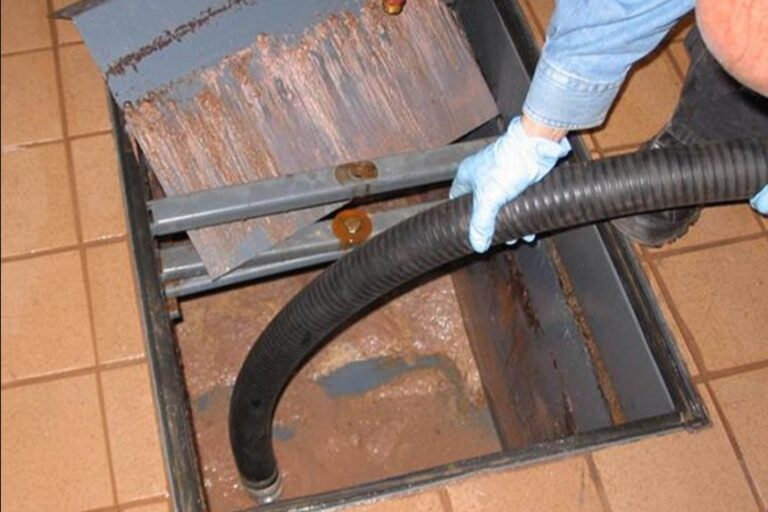
A trap works only while water keeps moving through it. Wastewater from the sinks comes in at one end. Inside, a wall called the baffle holds the floating grease back, food solids sink to the floor, and the separated water leaves through the outlet pipe at the other end. Anything that slows the water going out makes the level climb until it spills from the lid or the floor drains.
These are the common causes:
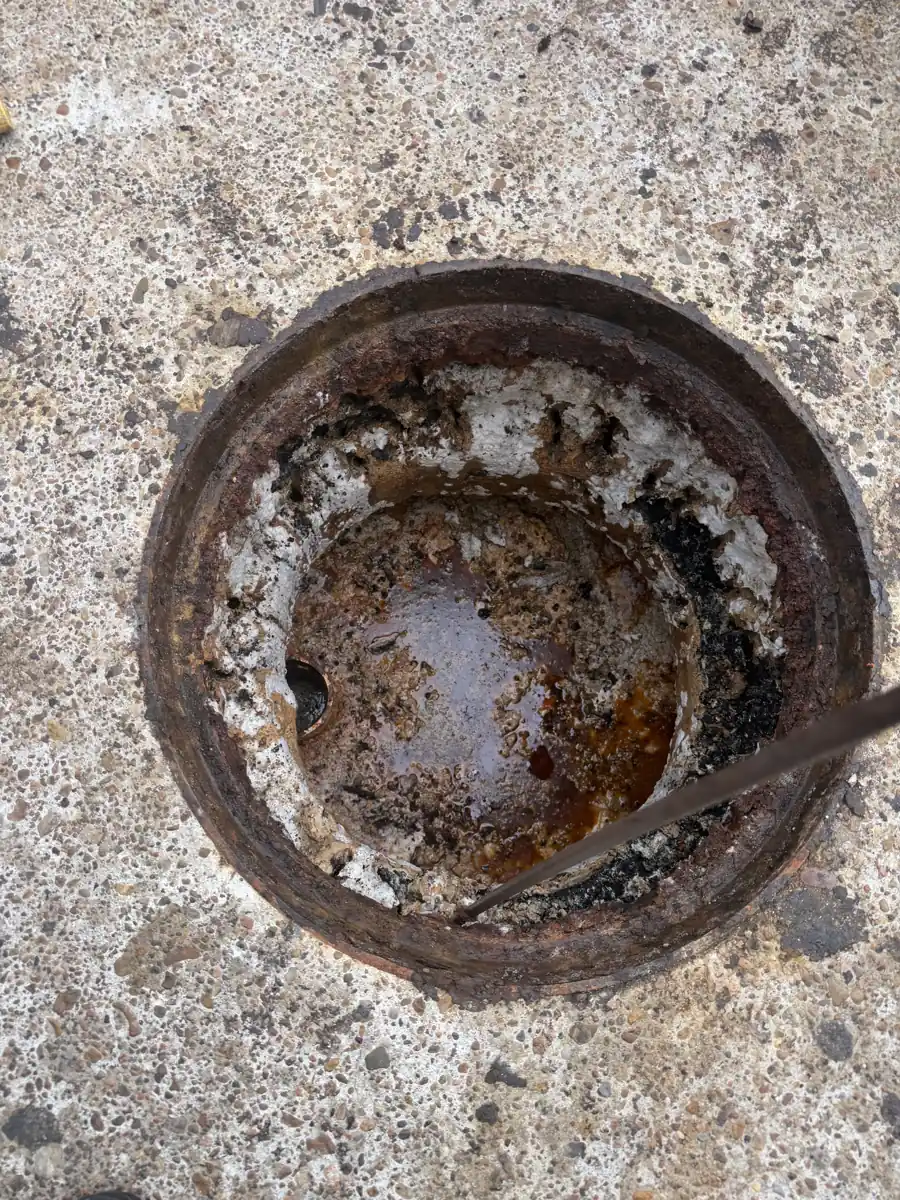
- The trap is full. Grease builds a thicker layer on top with every service, and solids pile up on the bottom where nobody can see them. Dallas requires a 100% pump-out at 90 days, or sooner once grease and solids fill 25% of the trap’s wetted height. Wetted height is the depth from the trap’s floor to the bottom of the outlet pipe. If your last pump-out was around 90 days ago or longer, start there.
- The outlet or the line beyond it is blocked. Grease that escapes the trap cools and sets inside the pipe. EPA names grease as the most common cause of reported sewer blockages. It “solidifies, reduces conveyance capacity, and blocks flow.” Once the exit narrows, water backs up into the trap even if it was just emptied.
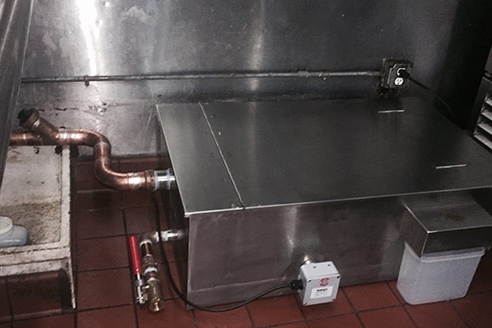
- More flows in than the trap was built for. A flow control device ahead of the trap should limit incoming water to what the trap was designed to take. When too much comes in, wastewater rushes through before the grease can separate and carries that grease on into the line, where it can build up. A dishmachine plumbed into the trap sends very hot water and detergent that keep grease mixed through the water, so it washes on through instead of floating. A garbage disposal feeding the trap adds solids it wasn’t sized for.
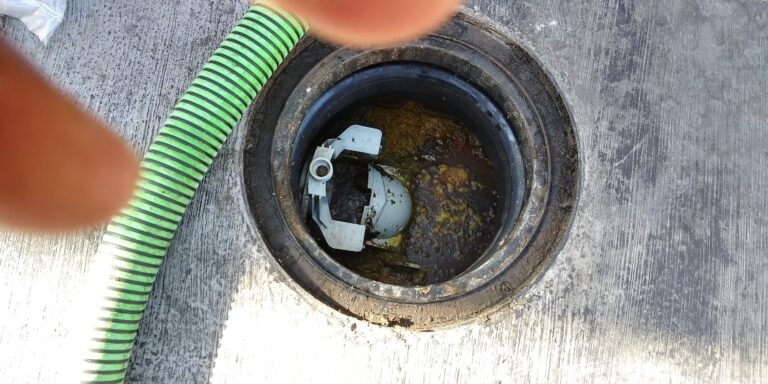
- Something inside is broken. A cracked or fallen baffle lets grease travel straight to the outlet, where it can build up in the pipe. The inlet tee is the T-shaped fitting on the incoming pipe, and it turns water downward. Without it, EPA’s inspector training says clogs and backups become more likely, and the grease layer itself can block incoming water. A corroded outlet tee can let grease escape into the sewer.
What should you do when a grease trap overflows?
- Stop the flow. Turn off the dishmachine and hold off on the sinks and mop water that drain to the trap. Every gallon you send in makes the spill bigger.
- Keep people back from the opening. EPA treats sewer manholes as confined spaces that can hold dangerous gases such as hydrogen sulfide and methane, and a trap lid is the same kind of access point. Nobody should put their head or hands into it.
- Call your pumping company. In Dallas that has to be a liquid waste transporter permitted by the City. If you don’t have one, the City’s notice says “A list of permitted transporters is available upon request.”
- Deal with the spill. Under the City’s notice, you must “report and clean up all spills or accidents involving grease, sand or grit collection and have the material disposed of properly.” The notice doesn’t name a separate office for spill reports. The office it lists for questions is the City’s Pretreatment and Laboratory Services Division, so start there.
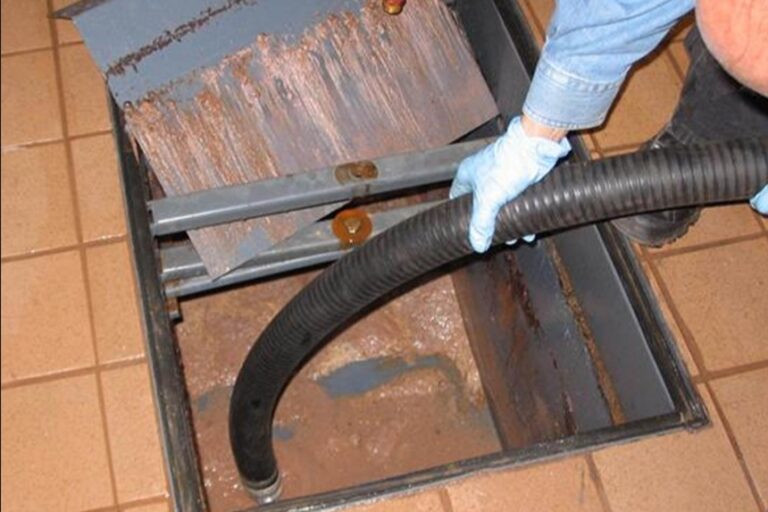
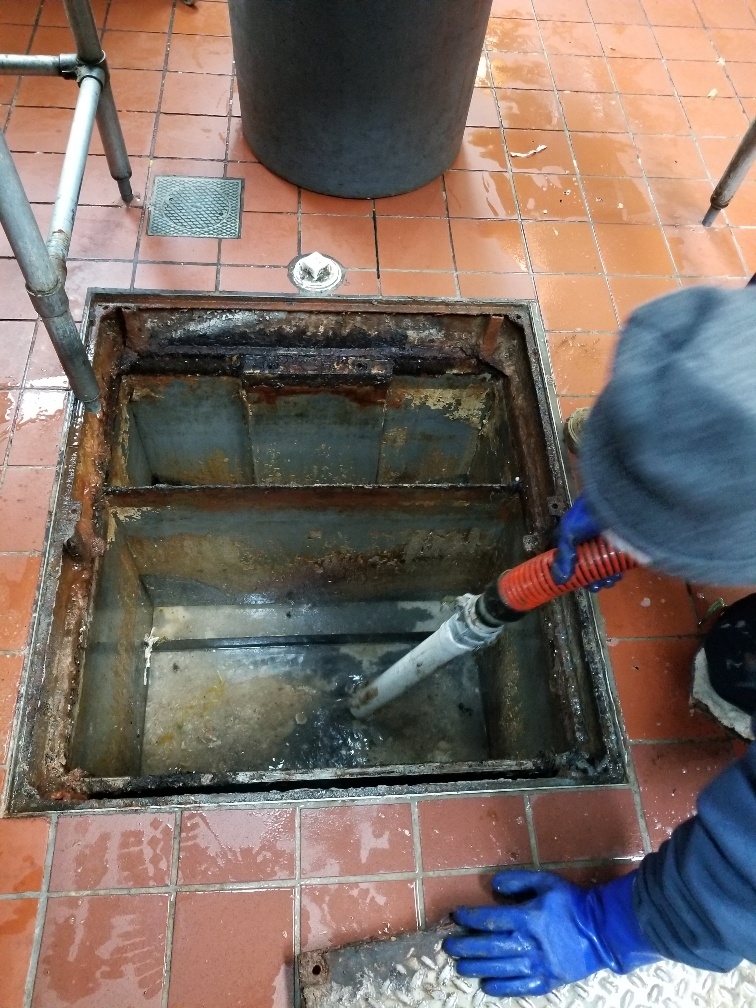
- Ask the crew what they found. With the trap empty, the inside can be seen. The trade standard for these units says that after each cleaning the inlet, outlet and air relief ports should be checked “clear of obstructions”. Ask whether they were, whether the baffle is whole, and whether the trap was deeper in solids than usual.
Why is my grease trap overflowing with water?
If what comes up is mostly water with little grease on it, the trap’s contents may not be the problem. Water rises in a trap when it can’t get out, so look at the exit side: the outlet pipe, the tee on it, and the sewer line beyond.
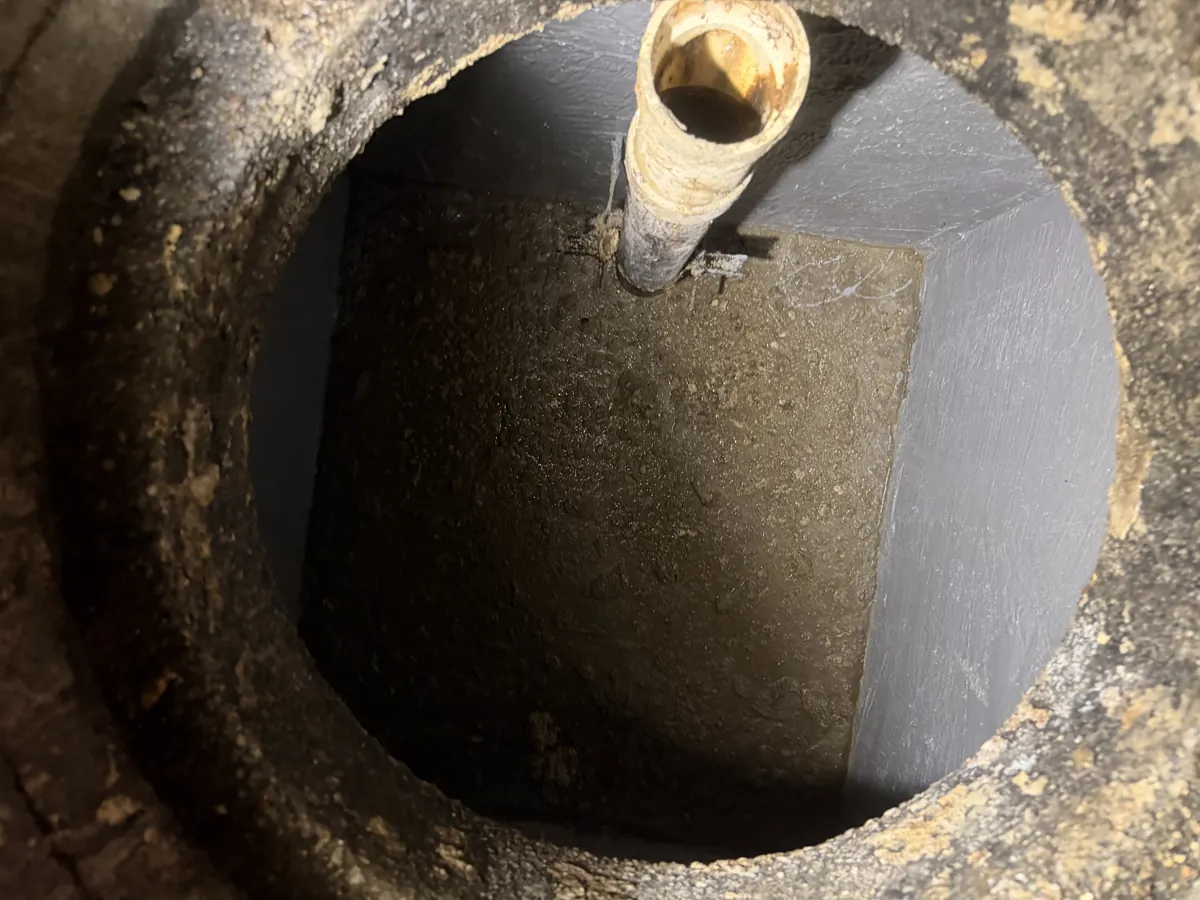
The pump-out is the test. If the trap is emptied and the water climbs again soon after normal use resumes, we read that as a sign the restriction is further along, not that the trap was full. Ask whether your trap has a cleanout: an opening at the outlet or just past it that gives access into the pipe itself, so a blockage there can be reached without opening the tank.
A blocked line is a plumber’s job, not a pumping or repair job.
A blocked air intake on the outlet side can slow things too. That vent lets air into the space above the water so the trap doesn’t build up back-pressure. It belongs on the list the crew checks after a pump-out.
Why does my grease trap keep overflowing after pump-outs?
Under the City’s notice, the restaurant is responsible for “maintaining the traps in continuous proper working condition.” The notice doesn’t spell out what that covers. As a repair company, we read it this way: a trap that keeps overflowing between on-time pump-outs isn’t in proper working condition, and pumping alone won’t show why. Keep pumping on the City’s schedule, and sooner whenever grease and solids reach 25% before the 90 days are up. Alongside that, three causes are worth ruling out, and only the last is about the trap’s structure.
The trap may be too small for the kitchen
In Dallas, the City’s Development Services plumbing inspector sets interceptor sizes. The brochure lists hours of operation, seating capacity and dishware use among the factors. A kitchen that has added seats, opened longer or switched to more dishware since the trap went in may now send it more than it was sized for.
EPA warns that an undersized trap lets wastewater short-circuit: it rushes through before the grease can separate and carries that grease into the sewer. Dallas has its own answer to an undersized trap. The inspector may increase your pump-out frequency if your interceptor is undersized or needs more maintenance. If your schedule keeps tightening, it is worth asking the City’s plumbing inspector whether a larger trap is needed, since the size comes from the City. Installing new grease traps is one of the four services we offer.
The kitchen may be feeding the trap what it can’t handle
Check what is plumbed in. A dishmachine connected to the trap and a missing flow control device are two connection mistakes EPA found together at one problem trap. A garbage disposal draining to the trap is another. The City’s brochure tells kitchens to scrape food scraps into the trash and avoid using the disposal.
EPA also describes a trap pumped on a short schedule, with its baffle and both tees in place, that still sent heavy grease downstream. The suspect there was the kitchen plumbing, not the trap. A sound trap doesn’t need repair, and repair won’t cure a plumbing problem.
The trap may be damaged inside
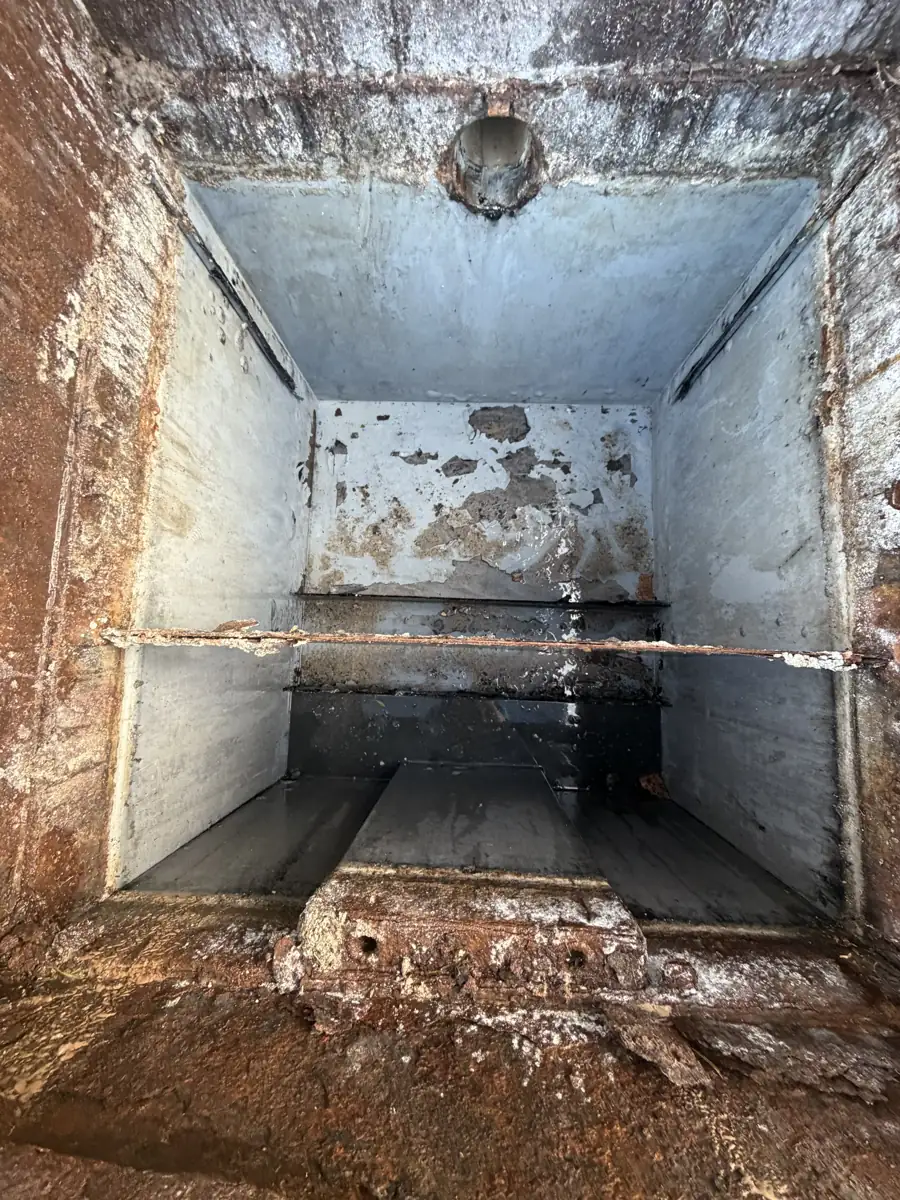
Concrete and steel traps both wear from the inside, by two different routes. Hydrogen sulfide gas leaves the wastewater into the air above it, turns into sulfuric acid on the damp concrete above the waterline, and the acid softens it. On steel, EPA describes hydrogen sulfide gas attacking the metal directly. The damage that matters for overflows is the kind that lets grease reach the outlet: a baffle with a section broken out, an inlet tee that has fallen off, or an outlet tee eaten through. Your pumping crew sees these first, with the trap empty.
For a wider look at what goes wrong, read what causes grease trap problems in Dallas kitchens and how Dallas businesses can deal with grease trap damage.
Pump-out problem or repair problem?
| What you’re seeing | What it may mean | Who to call |
|---|---|---|
| The overflow came when the trap was nearly due for emptying, with a thick grease layer on top | The trap is full | Your pumping company, a City-permitted transporter |
| Water rose again soon after a full pump-out | The outlet or the sewer line after it is blocked | A plumber |
| Overflows keep returning on a proper schedule, and the crew says the trap is sound | The trap is too small, or the kitchen connections are wrong | The City’s plumbing inspector on sizing; a plumber on connections |
| The crew reports a broken baffle, a missing tee, or walls that are crumbling or rusted through | Damage inside the trap | Us, for a free on-site inspection |
Is an overflowing grease interceptor any different?
The two names get used loosely, and the Dallas brochure uses both. For an overflow, the name matters less than the rule, and Dallas holds both to the same one: the brochure says the City Code “requires all grease traps and interceptors be pumped out at least every 90 days or when it is 25% full of solids and grease.”
In a tank with more than one compartment, the dividing walls do the baffle’s job. A broken wall lets grease into the last compartment and on toward the outlet pipe. If the tank sits outside, a spill from its access cover falls under the same City spill duty as one inside.
The causes and the order of calls are otherwise the same: pumping company, then plumber if the line is blocked, then a repair inspection if something inside is broken. When the Dallas inspector visits, they measure how much grease and solids have built up. Does an overflow fail the visit on its own? The brochure doesn’t say. The citations it lists are for “not having a grease interceptor, failure to service your grease interceptor at least every 90 days, not having manifests onsite or using a non-permitted transporter.” Our guide on how to pass a grease trap inspection in Dallas covers what else that visit checks.
Can a grease trap that keeps overflowing be repaired?
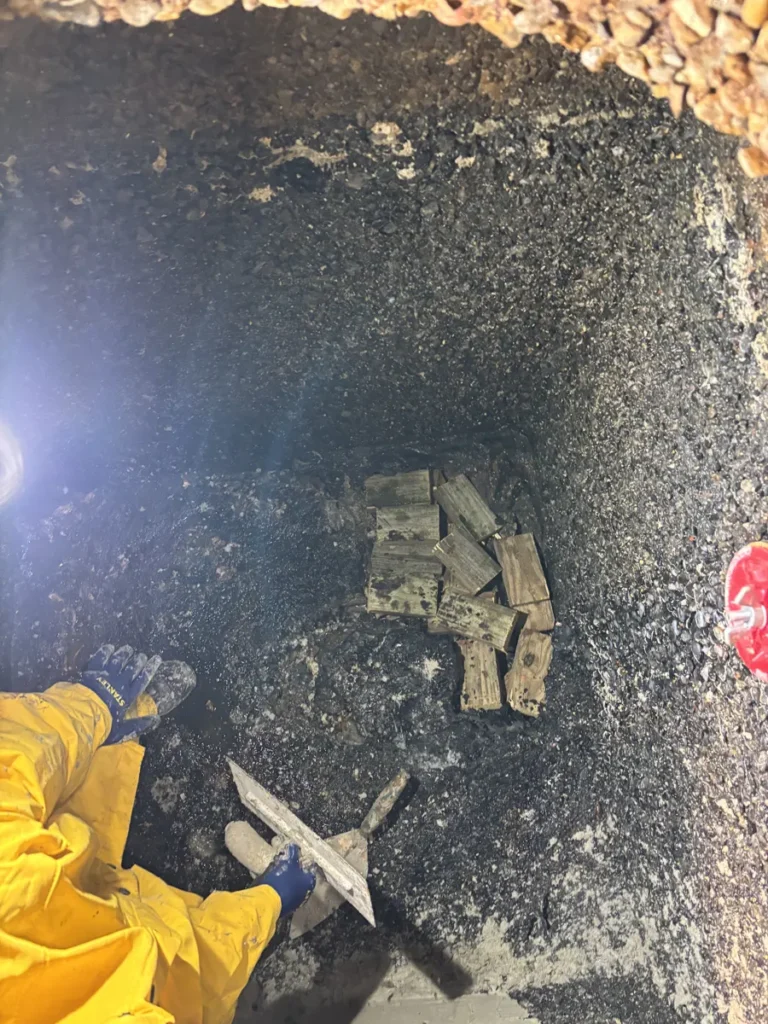
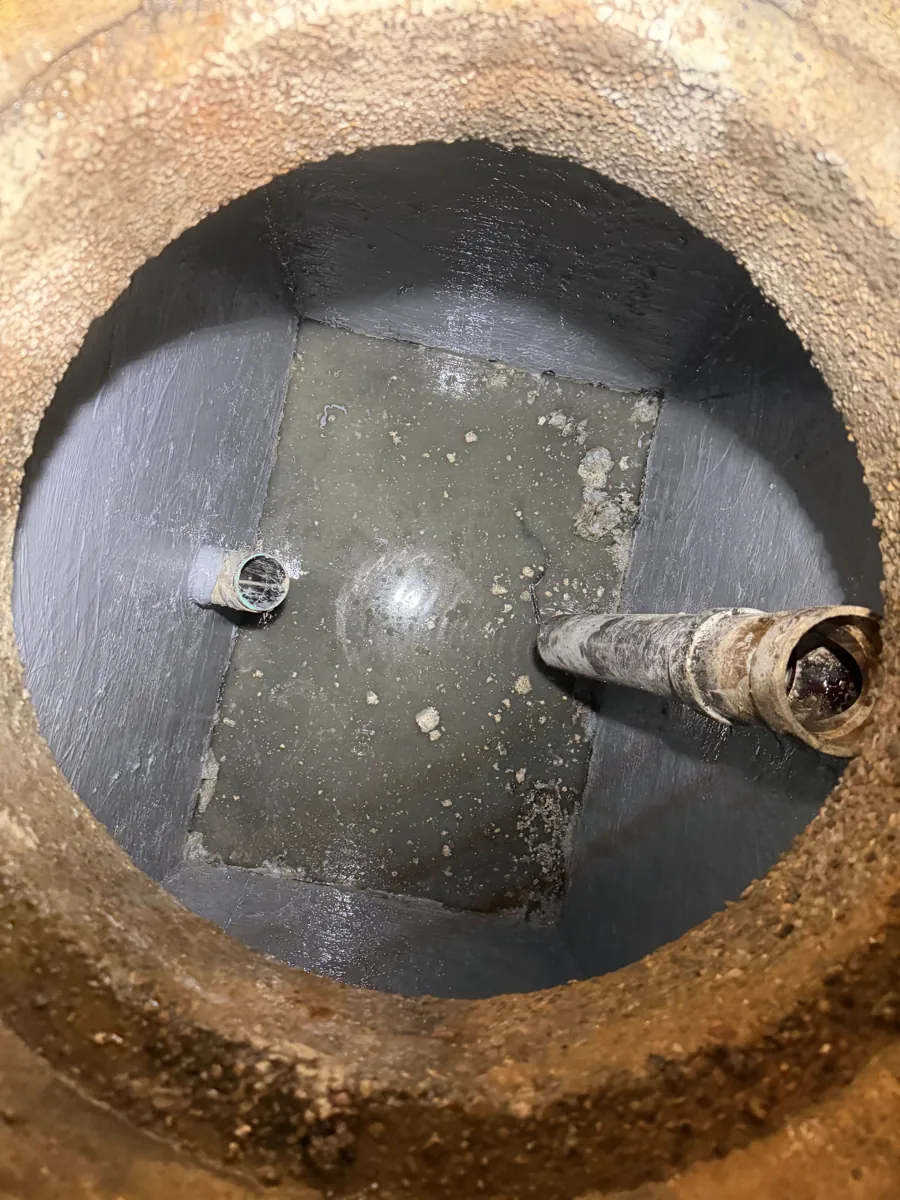
When damage is the cause, repair is worth checking before replacement. The repair is called coating. First your pumping company empties the trap. Our crew then degreases the inside, closes the holes and cracks, rebuilds broken baffle walls and repairs the inlet and outlet T-pipes. Last, the whole trap is coated.
We work on cast concrete, steel and fiberglass traps, underground or above ground. The crew comes overnight after your kitchen closes, and the trap is back in use the next morning. A repair typically costs under half of what replacing the trap would. You can see the kind of work involved on grease trap repair projects page.
Our repair work is guaranteed to pass inspection. Behind that guarantee are high industrial-grade materials, a repair back to the original specifications, and coordination with the city inspectors on any inspection that’s needed. The trap’s size, the way the kitchen is plumbed in and pump-outs on time stay the restaurant’s job.
The work carries a 10-year warranty on labor and materials, as long as the trap gets regular pump-outs.
Coating won’t make a small trap bigger or correct a kitchen connection. That is why it starts with a free on-site inspection: a technician looks at the trap and tells you whether repair is the right answer for your overflow. That visit is our own look at the trap, separate from any City inspection.
We also offer grease trap deep cleaning and degreasing as one of our four services.
How our grease trap repair works in Dallas
What else do people ask about an overflowing grease trap?
What are the warning signs before a grease trap overflows?
Trade sources, not City rules, point to a few: drains running slower than usual, sometimes with gurgling, and a rotten-egg or sewage smell near the drains or the trap. They read these as signs the trap is full or overdue. Any of them is a reason to check when the trap was last pumped.
Is an overflowing grease trap the same as a leaking one?
No. An overflow is water rising and spilling out of the top. Trade sources read a water level that drops between uses as a sign of a leaking tank rather than a full one. A leak is worth having looked at, because a pump-out won’t fix it.
A rotten-egg or sewage smell has its own guide: why does my grease trap smell.
Can I pour drain cleaner into an overflowing grease trap?
No. The City’s notice says “Hazardous wastes, such as acids, strong cleaners, pesticides, herbicides, paint, solvents or gasoline, should not be disposed of in the sanitary sewer.”
Will enzyme or bacteria products stop the overflows?
The City’s brochure says “Bacterial and enzyme products will not decrease your pump out frequency”. The 90-day and 25% limits stay the same whatever you add.
Who do you call for an overflowing grease trap in Dallas?
If the trap is full or due, call your pumping company now. If the water came straight back after a pump-out, call a plumber. If the overflows keep returning on a proper schedule, or your pumping crew has spotted a broken baffle, a missing tee or crumbling walls, call us for a free on-site inspection. We’re open 24/7, and a person answers at night. Check the Dallas-area cities we serve, or send us a message.
Sources
- City of Dallas, Grease Interceptors brochure (PDF)
- City of Dallas, Grease Traps/Interceptors notice for food service establishments (PDF)
- U.S. EPA, Fats, Oils and Grease webinar slides (PDF)
- U.S. EPA, National Pretreatment Program fact sheet, Controlling Fats, Oils, and Grease Discharges from Food Service Establishments
- U.S. EPA, Hydrogen Sulfide Corrosion on Wastewater Collection and Treatment Systems, Report to Congress
- Plumbing and Drainage Institute, grease interceptor standard (the trade standard quoted on checking ports after cleaning)
- Schier Products, a grease interceptor manufacturer, on corrosion (the corroded outlet tee)
- Trade sources on warning signs and leaks: blog posts from plumbing companies
- Bellevue, Washington Utilities, grease interceptor guidance (how a trap separates grease and solids)
Last updated October 2026. Links last reviewed October 2026.